
You apply for a loan, sign up for a phone plan, or fill out a rental application, and someone checks your credit score. That little number can shape how much you pay and what doors open for you. Blue Copper Capital helps you understand where you stand so you can make smarter money choices every day.
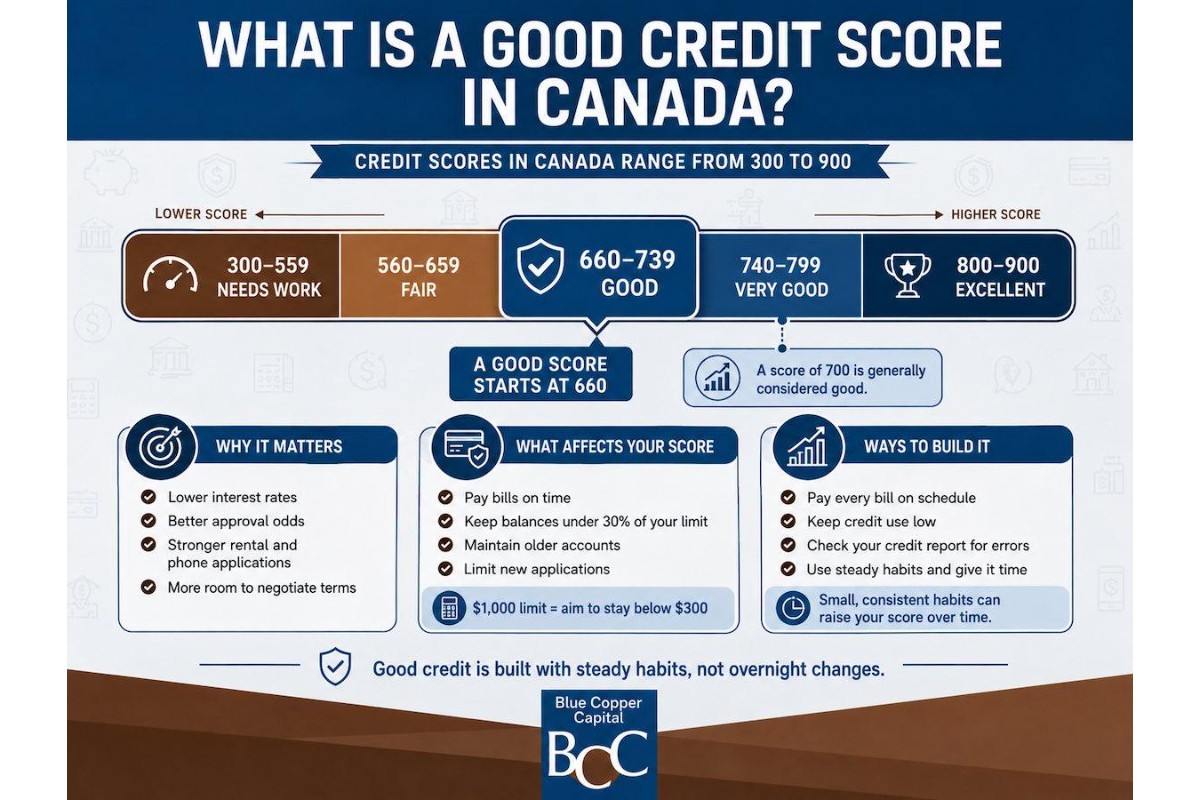
In Canada, a good credit score sits at 660 or higher, while anything above 740 falls into very good or excellent territory. The closer you get to 900, the more options you tend to have. The good news is that you can build your score over time with steady habits.
What a Credit Score Actually Means
Your credit score is a three-digit number that sums up how you handle borrowed money. It tells lenders, at a glance, how reliable you’ve been with payments in the past.
Lenders use this number to judge how likely you are to pay back what you borrow. A higher score signals lower risk, so lenders feel more comfortable saying yes. Scores in Canada run from 300 on the low end to 900 at the top.
Think of it like a report card for your money habits. The number moves up or down based on how you manage credit cards, loans, and bills over time.
Credit Score Ranges & What Counts as Good
Not every score lands in the same spot, and the ranges help you see where you fit. Here’s how the numbers break down:
- 660 or higher is generally seen as good
- 740 to 799 falls into the very good range
- 800 and above sits in the excellent range
Knowing your range gives you a clearer picture of what to expect when you borrow. It also shows you how much room you have to grow.
Average Score Across Canada
Many Canadians fall within the good to very good range, but your exact score depends on your credit history and the scoring model used.
If your score sits lower than that, don’t worry. A lower number simply means you have room to grow, and steady habits can move you up.
Is a 700 Score Bad?
A score of 700 is far from bad. It’s a solid spot that puts you in good standing with most lenders.
Reaching 800 takes time and patience, so think of it as a long-term goal rather than an overnight one. Small, consistent steps help you climb steadily toward that range.
Why Your Credit Score Matters Day to Day
Your credit score shows up in more parts of life than you might expect. A strong number can save you real money and open more doors.
Here’s how a good score can help in everyday situations:
- You can qualify for lower interest rates on loans, which means smaller payments over time
- You have stronger odds with landlords and phone plan providers
- You get more room to negotiate the terms that work for you
Picture the difference between paying hundreds in extra interest versus keeping that cash in your pocket. That’s the kind of impact a healthy score can have.
What Affects Your Credit Score
A few key factors shape your number, and knowing them helps you take control. Once you understand what moves the needle, you can focus your energy where it counts.
Payment History & Credit Use
On-time payments carry the most weight of anything on your report. Even one missed bill can leave a mark, so paying on schedule matters most.
How much credit you use also plays a big role. Try to keep your balances under 30% of your available limit. For example, if your card limit is 1,000 dollars, aim to keep what you owe below 300 dollars.
History Length, Mix & Inquiries
The age of your accounts affects your score, too. Older accounts help because they show a longer track record of steady habits.
A mix of credit types, like a credit card alongside a loan, can add value to your profile. However, applying for too many new accounts in a short window can cause your score to dip. Space out your applications to soften the impact.

Simple Steps to Build & Check Your Score
Building a strong score comes down to a handful of habits you can start today. Follow these steps to move in the right direction:
- Pay your bills on time, every time, even the small ones
- Keep your balances low across all your accounts
- Check your credit report for errors and dispute anything that looks off
How to Rebuild a Low Score
If your score sits around 500, steady habits can move it toward 700 over time. The key is consistency, not speed. Very low scores are often connected to accounts that have gone to collections, so review your credit report, identify any collection accounts, and make a plan to address them.
Small steps add up over months. A payment made on time here, a lower balance there, and your number starts to climb. For people working toward a fresh start, it can help to understand what borrowing options are available and what fits your budget.
If you’re working on your credit or exploring loan options, Blue Copper Capital can walk you through the next step. The team offers flexible options for personal loans, business loans, and other borrowing options based on your location and eligibility.
Start your application online, call the team, or visit in person to learn what may fit your situation.