
Your car breaks down on the way to work, and the repair bill lands at $1,200. Or maybe a sudden layoff leaves you wondering how you’ll cover next month’s rent. These moments hit hard, and they rarely give you a heads-up. That’s why having a plan, and knowing your options, can make the situation easier to manage.
So how much should you actually keep on hand for surprises like these? Most people benefit from saving three to six months of basic living expenses, though your right number depends on your income, your bills, and how steady your work feels.
What an Emergency Fund Is & Why It Matters
An emergency fund is money you tuck away for surprise costs you can’t plan for. Think job loss, a broken furnace in the middle of an Alberta winter, or an unexpected medical bill.
Having this cash ready keeps you from reaching for credit cards or loans every time life throws a curveball. That means less stress and less debt piling up while you handle the problem.
Emergencies vs. Everyday Expenses
A true emergency is sudden, unplanned, and something you genuinely need to cover right away. A flat tire counts. A concert ticket does not.
The difference comes down to needs versus wants. Before you dip into your fund, ask yourself if the cost is something you could have skipped or delayed. If the answer is yes, it probably isn’t an emergency.
How Much Should You Save?
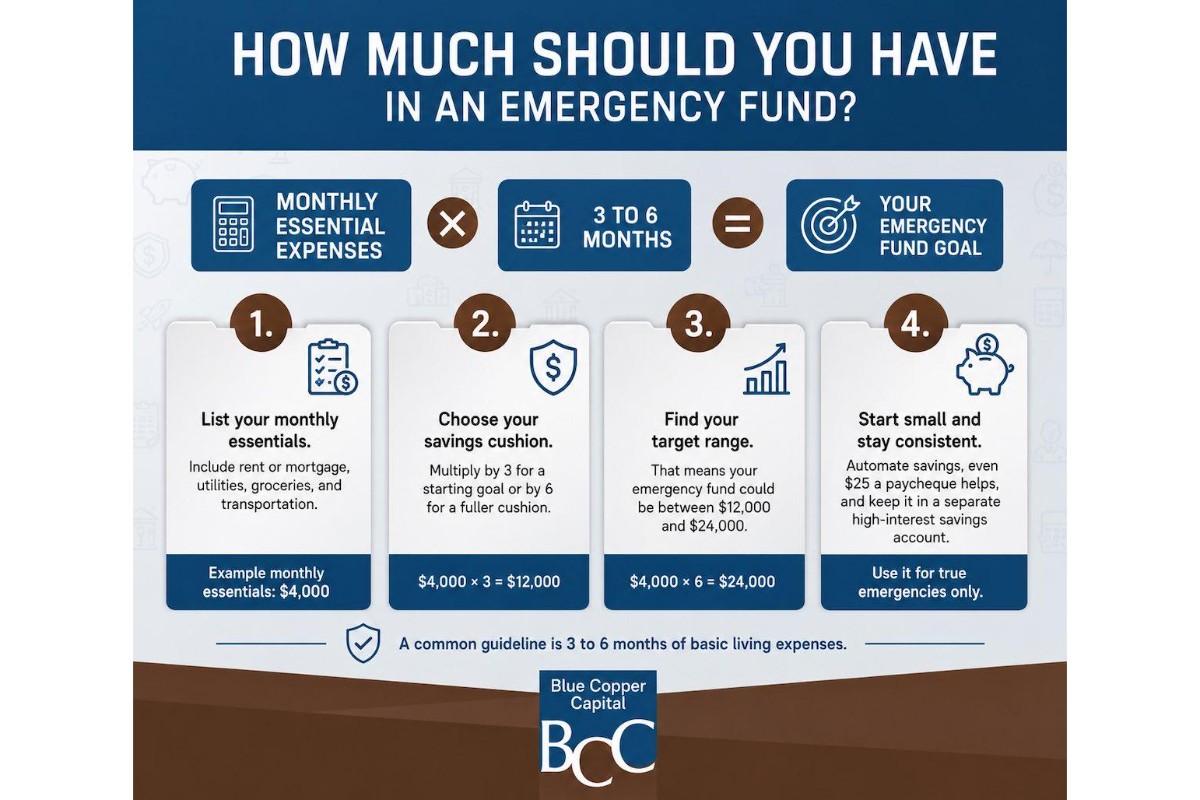
The common guideline is three to six months of expenses. To find your target, add up your monthly non-discretionary costs, the bills you have to pay no matter what.
Once you have that monthly total, multiply it by three for a starting goal or by six for a fuller cushion. This gives you a clear number to work toward.
A Simple Example
Say your core bills come to $4,000 a month. Multiply that by three to six, and your emergency fund goal lands somewhere between $12,000 and $24,000.
That range is a starting point, not a hard rule. Adjust the number to fit your own life and what feels safe for you.
Can You Save Too Much?
A larger fund makes sense if your income changes month to month, like freelance or seasonal work. Six months of expenses, or even more, can give you breathing room.
However, once your fund feels solid, extra cash sitting idle may do more for you elsewhere. You might put it toward investments or paying down debt, where it can grow or save you money over time.
How to Figure Out Your Own Number
Start by listing your real monthly basics. These usually include the following.
- Rent or mortgage
- Utilities like heat, power, and water
- Groceries
- Transportation and fuel
Next, subtract your expenses from your monthly income. Whatever is left over can go straight toward your savings goal. Even a small amount each month adds up faster than you’d expect.
Adjust as Life Changes
Your number won’t stay the same forever. A new child, a home purchase, or rising grocery costs can all shift how much you need to feel secure.
Check in on your goal a few times a year. A quick review helps your fund keep pace with your life instead of falling behind.
Smart Ways to Build Your Fund
Growing your savings doesn’t have to feel overwhelming. A few simple habits can move you toward your goal.
- Start small and stay consistent, even $25 a paycheque counts
- Automate transfers on payday so you save before you spend
- Save windfalls like tax refunds or work bonuses instead of spending them
Trim Everyday Expenses
Small daily costs add up quietly. Packing your lunch and brewing coffee at home can free up cash you’d otherwise spend without thinking.
Take a look at your subscriptions too. Cancelling a streaming service or app you forgot about can send a few extra dollars toward your fund each month.
Where to Keep the Money
Keep your fund in a separate savings account so you can reach it quickly but won’t spend it by accident. Mixing it with your everyday cash makes it too easy to dip in.
A high-interest savings account helps your balance grow faster while it sits there. Your money works a little harder while you wait for the day you might need it.

When to Use Your Fund & Other Options
Spend your fund only on true emergencies, the costs you can’t avoid or delay. The rest of the time, leave it alone so it’s ready when you really need it.
Once you use it, focus on building it back up. Treat that as your next savings goal.
When Savings Fall Short
Sometimes an emergency costs more than you’ve managed to save, and that’s okay. When that happens, flexible loan options may help working adults bridge the gap, as long as the repayment plan fits their budget.
Blue Copper Capital offers transparent lending options based on your location and eligibility. The team gets to know the person behind the application and walks you through the process so you understand every step.
If a surprise cost has you stuck, you can start your application online, give the team a call, or visit in person. Reach out to Blue Copper Capital today to talk through loan options that fit your situation.